.png)
How do I grow my Construction company past $10 million without losing control of quality?
Table of Contents
• The Million Ceiling: Why Quality Suffers When the Founder is the Filter
• The 8-Pillar Framework: Building Systems That Enforce Quality at Scale
• From Operator to Intentional Builder: Scaling Your AEC Leadership
The $10 Million Ceiling: Why Quality Suffers When the Founder is the Filter
For many founders in the Architecture, Engineering, and Construction (AEC) industry, the $5 million to $10 million revenue mark feels less like a milestone and more like a wall. Growth stalls, stress skyrockets, and the very quality that built your reputation begins to fray at the edges. This is the “Owner’s Trap,” a predictable yet perilous stage where the founder’s personal involvement becomes the primary bottleneck to scale.
Your expertise, once the company’s greatest asset, now limits its potential. Every critical decision, every quality check, and every client relationship funnels through you. The result is a business that cannot grow beyond your personal capacity. This dependency not only caps your revenue but also severely diminishes your company’s valuation. An acquirer doesn’t want to buy a job; they want to buy a self-sustaining asset. When you are the system, the value walks out the door with you.
This is the fundamental conflict between the “Indispensable Operator” and the “Intentional Builder.” The Operator runs the business day-to-day, putting out fires and ensuring each project meets their personal standard. The Builder, however, designs a business that operates, scales, and maintains quality independently of their physical presence. To break past the $10 million ceiling, you must transition from the former to the latter. It’s a shift from being the best craftsman in your company to being the best architect of your company.
Identifying the Bottleneck in Your Construction Operations
Recognizing owner-dependency is the first step toward building a scalable enterprise. If you find yourself nodding in agreement with the following statements, your personal involvement has likely become a critical risk to both quality and growth:
• Your phone is the first to ring when a problem arises on any job site.
• You personally review every significant bid or change order before it goes out.
• Clients insist on dealing with you directly, bypassing your project managers.
• You feel that if you took a two-week, completely unplugged vacation, project quality would noticeably decline.
• Your team hesitates to make key decisions without your final approval.
Each of these is a symptom of a business built around a person, not a process. The financial cost of this “founder-only” expertise is staggering. It creates project delays while your team waits for your input, generates inconsistent results when you’re spread too thin, and makes it nearly impossible to attract and retain top-tier management talent who crave autonomy and accountability. This is the paradox many founders face: the belief that being the best actually protects their company can, in fact, be lowering its long-term value. If you're unsure how deep the dependency runs, it may be time to assess whether your business is too dependent on you.
The 8-Pillar Framework: Building Systems That Enforce Quality at Scale
The solution to owner-dependency is not to work harder or hire more people into a broken system. The solution is to build a new system—one that embeds your standards for quality into the company’s operational DNA. This is the core principle behind The Value Builder System™, a proven methodology designed to transform your business into a scalable, high-value asset.
Companies that implement this 8-pillar framework increase their value by an average of 71%. The system works by strengthening the key drivers that make a business attractive to buyers and resilient to market shifts. For a construction firm aiming to scale past $10 million, four of these pillars are especially critical for maintaining quality without founder oversight:
The Hub & Spoke
This pillar directly addresses owner-dependency. The goal is to create a business that is no longer a "hub" (the owner) with "spokes" (employees) all dependent on the center. Instead, you build robust management structures and documented processes that allow the team to operate effectively and autonomously. Quality becomes a function of the system, not the founder’s schedule.
The Valuation Teeter-Totter
This driver focuses on cash flow. In construction, cash flow volatility is a major threat to quality. When cash is tight, corners get cut. By systematizing your financial controls—improving estimating, billing cycles, and change order processes—you stabilize cash flow, giving your team the resources to deliver on your brand promise without compromise.
Recurring Revenue
While project-based work is the norm in construction, creating predictable revenue streams adds immense stability. This could involve maintenance contracts, service agreements, or phased master plans. Predictable revenue smooths out the boom-and-bust cycles, allowing you to invest in training, equipment, and talent consistently, which are the bedrock of sustained quality.
Monopoly Control
This is about differentiating your firm in a way that is difficult for competitors to replicate. It’s not about being the only general contractor in town; it’s about owning a unique process, proprietary technology, or specialized expertise, such as the architectural and fit-out solutions provided by Aakruti Technical Services. This differentiation protects your margins from price pressure, enabling you to afford the best materials, subcontractors, and talent.
Implementing SOPs That Protect Your Reputation
The practical application of these pillars comes down to creating and implementing Standard Operating Procedures (SOPs). This means productizing your services. Whether it’s a pre-construction checklist, a client communication protocol, or a site safety audit, every critical task should be documented and repeatable. The goal is to ensure that every crew, on every job site, delivers a consistent result that reflects your company’s standard of excellence.
This commitment to a high standard of excellence should be visible in every aspect of your projects, from the site safety markers to the final building signage; you can learn more about Signarama to see how their custom commercial solutions can enhance your firm’s professional image.
SOPs are not about creating rigid, bureaucratic rules; they are about creating a playbook for success. They empower your team by giving them a clear framework for making decisions, solving problems, and delivering quality. This is how you transfer your expertise from your head into the hands of your employees. By building a business based on systems, you create an asset that can run without you. The first step is to understand where your business stands today. Assess your business value drivers to get a clear, data-driven picture of your company's strengths and weaknesses.
From Operator to Intentional Builder: Scaling Your AEC Leadership
Building a system-driven company requires a profound shift in your role as a leader. You must evolve from the chief problem-solver to the chief strategist. This transition is impossible without a strong second layer of leadership—a management team that is accountable to the systems you’ve built, not just to you personally.
This empowered management layer is your firm’s defense against the chaos of the modern economy. When interest rates fluctuate, regulations change, or labor shortages intensify, a founder-dependent firm is reactive. An Intentional Builder, however, leads a team that can navigate these challenges strategically. Your job is no longer to put out fires but to scan the horizon for opportunities and threats, guiding the company with a long-term vision.
This is often the most difficult part of the journey. Letting go of control and trusting your team and your systems requires a new level of leadership maturity. Executive leadership coaching is often essential during this phase. It provides the strategic framework and accountability needed to move from daily operations to high-level direction, ultimately transforming your company into a high-value asset that provides both financial and personal freedom.
The Role of Masterminds in Navigating Growth Chaos
You are not the first AEC owner to face the challenge of scaling past the $10 million mark. The path is well-trodden, and the pitfalls are predictable. This is why peer-to-peer learning is so critical for founders in the $1M to $20M revenue range. Joining a mastermind group of non-competing AEC leaders provides a confidential forum to share challenges, vet strategies, and learn from the successes and failures of others on the same journey.
Instead of reinventing the wheel, you gain access to a collective of expertise focused on the unique pressures of the construction industry. Discussions about managing subcontractors, implementing new technology, or structuring management incentives become collaborative problem-solving sessions. This environment accelerates your transition from Operator to Intentional Builder by surrounding you with peers who hold you accountable to that higher-level vision.
Scaling a construction company while maintaining quality is not about finding a magic bullet. It is a deliberate process of building systems, empowering people, and evolving your own leadership. It is the path to creating an enduring business that is not only larger but stronger, more resilient, and ultimately, more valuable.
Ready to transition from an indispensable operator to the intentional builder of a high-value firm? Explore our AEC Executive Coaching and Masterminds to connect with peers and build the systems for sustainable growth.
To start your journey, take the first step and see how your business measures up against the eight key drivers of value. Get your Value Builder Score today.
Article by
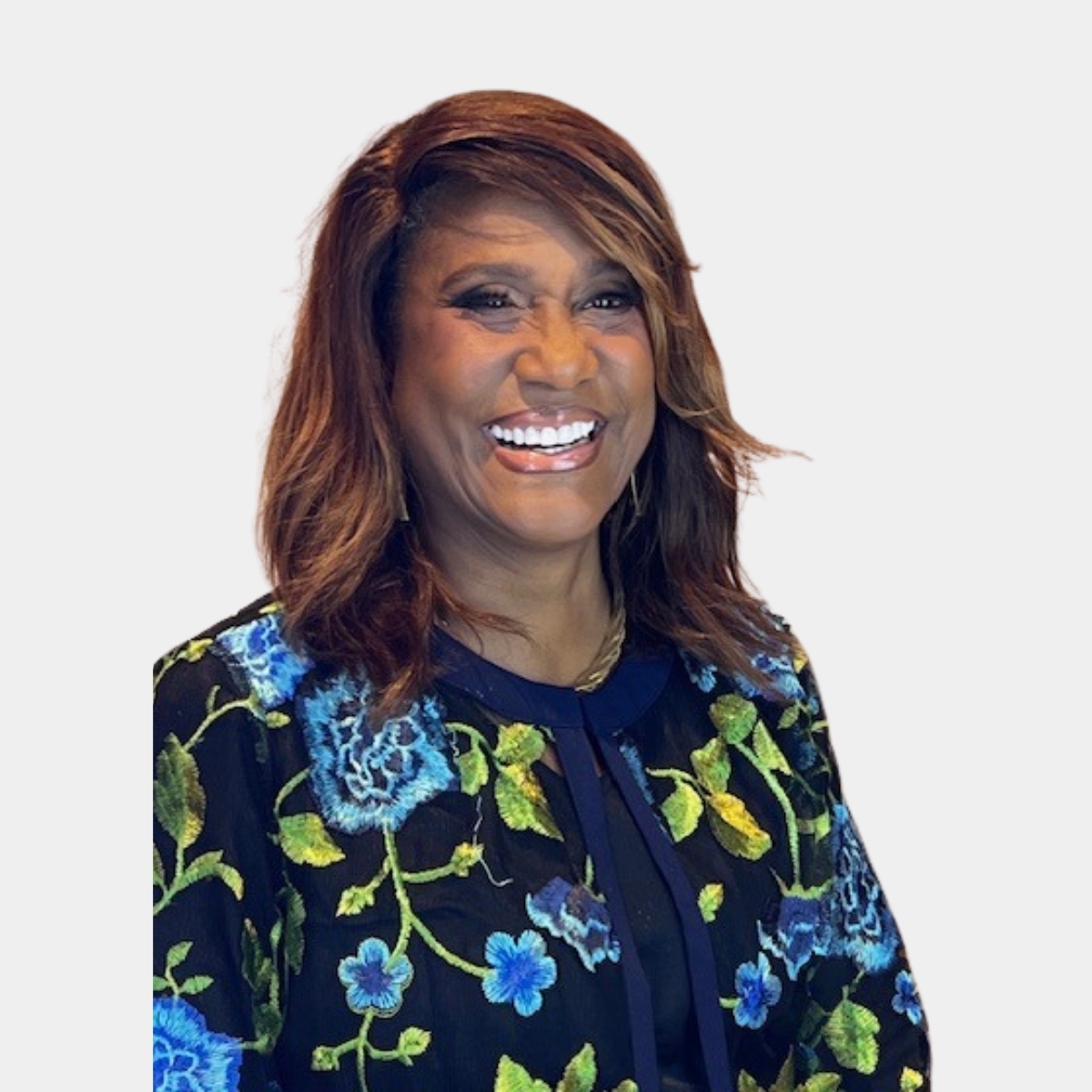
Franne McNeal
Franne McNeal, President, Significant Business Results LLC has helped 885+ small business owners collectively create 15,000 jobs and nearly $11 billion in revenue. I build architecture, engineering and construction (AEC) firms that are worth more and don't collapse when the owner steps back. We help architecture, engineering, and construction industry business owners with $1M-$20M in annual revenue, transform founder-dependent businesses into scalable, high-value enterprises. We solve the problems of low margins, inconsistent revenue and pressure to lower prices, by helping clients create a business that is an asset (one that runs without them), based on a proven system 8-pillar framework to increase the value of a business by 71%. We empower owners to move from being indispensable operators to intentional builders of enduring businesses, so they create financial & personal freedom. Our clients focus their energy for action to achieve significant business results.