.png)
Why being the 'best' Engineer lowers your business value

Table of Contents
• The Technician's Paradox: Why Your Reputation is a Valuation Killer
• The 8 Key Drivers of Company Value for AEC Firms
• The Transition: From Indispensable Operator to Intentional Builder
The Technician's Paradox: Why Your Reputation is a Valuation Killer
In the Architecture, Engineering, and Construction (AEC) industry, your reputation as the go-to technical expert is a badge of honor. Clients seek you out by name, competitors respect your skill, and your team relies on your final say for every critical decision. You are the firm’s greatest asset. But when it comes time to sell, that same reputation becomes your single greatest liability. This is The Technician's Paradox: the very expertise that built your firm is precisely what is killing its business value.
This reality is a difficult one for many successful founders to accept. You’ve built a profitable business, but what you’ve actually created is a high-paying, high-stress job for yourself. This is the "Owner Trap." If your firm cannot function, close deals, and deliver projects without your daily, hands-on involvement, it isn't a sellable asset. It's a business entirely dependent on you.
From a buyer’s perspective, this dependency is a massive red flag. They see a "Hub-and-Spoke" model where you are the central hub, and every client, project, and employee is a spoke. If the hub is removed, the entire wheel collapses. This dramatically increases the perceived risk of the acquisition and, as a result, slashes the valuation multiple they are willing to offer. This is why many AEC firms with revenues between $1M and $20M hit a growth ceiling—a limit directly tied to the finite number of hours the founder can personally work.
The Multiple of Risk: How Dependency Lowers Your Sale Price
Business valuation is often calculated by applying a multiple to your profits. This multiple isn't arbitrary; it's a direct reflection of risk. A stable, system-driven business that runs smoothly without its owner is a low-risk investment and commands a high multiple. Conversely, a firm built around the founder's genius is a high-risk proposition. The number one fear of any acquirer is, "What happens to the revenue and client relationships when the founder leaves?" If the answer is uncertain, the offer will be low—if an offer is made at all. Your irreplaceability makes the business fundamentally unsellable at its true potential value. To learn more, explore the risks of being an irreplaceable business owner.
AEC Pain Points: The Expert Bottleneck
The AEC industry is already grappling with persistent labor shortages and intense margin pressure. When you operate as the chief expert, you become the primary bottleneck, exacerbating these challenges. Your need to review every drawing or approve every major decision prevents you from effectively delegating. This not only stunts your team's growth but also prevents you from developing the next generation of leaders who could one day run the company. This "hero model" of project acquisition and execution leads to inconsistent revenue streams tied to your personal efforts, rather than the predictable, consistent revenue that a scalable business model provides.
The 8 Key Drivers of Company Value for AEC Firms
Breaking free from the Owner Trap requires a strategic shift from working in your business to working on it. The key is to build a company that is valuable in its own right, independent of any single individual. The Value Builder System™, a proven 8-pillar framework, provides a clear roadmap to achieve this. Firms that implement this system have been shown to increase their value by an average of 71%.
This framework forces you to critically assess the core components of your business, moving it from a personality-driven practice to a process-driven enterprise. For example, one of the eight drivers is "The Hub & Spoke," which directly measures how much your firm's operations revolve around you. Another is "Financial Performance," but it's viewed through the lens of financial freedom—demonstrating that your profits are not solely dependent on your personal billable hours.
The ultimate goal is to productize your AEC services. This doesn't mean creating a physical product; it means transforming your custom, one-off engineering feats into scalable, repeatable systems that any qualified team member can execute. This systemic approach is the foundation of a truly valuable and sellable firm.
Moving Beyond the 'Rainmaker' Model
If your personal network is the primary source of new business, your revenue is inherently unpredictable and non-transferable. To build lasting value, you must create a sales and marketing engine that operates independently of you. This involves developing standardized proposal processes, implementing a CRM to manage client relationships, and empowering a sales team or business development manager to cultivate leads. The objective is to ensure revenue generation is a firm-wide capability, not a founder-specific skill. The first step is to understand where your firm currently stands. Assess your firm's current value with the Value Builder Score to get a clear, data-driven baseline.
The Monopoly Control: Differentiating Your Firm Without Your Ego
Another key driver of value is what we call "Monopoly Control"—your ability to differentiate your firm from the competition. In an owner-dependent firm, the unique selling proposition (USP) is often the founder's personal expertise. To build a sellable asset, you must shift this USP from a person to a process. Develop a proprietary methodology, a unique project management system, or a specialized niche that the entire firm embodies. This allows you to address price pressure by positioning yourself as a "specialist firm" known for a specific, documented approach, rather than just a firm with a "specialist person" at the helm. Discover more about this framework by reading about the 8 value drivers to scale your AEC firm.
The Transition: From Indispensable Operator to Intentional Builder
Making the transition from the firm’s top technician to its strategic architect requires deliberate action. It’s a multi-step process focused on systematically removing yourself from the day-to-day operations and empowering your organization to thrive without you.
Audit Your Time
Begin by rigorously tracking your daily activities for two weeks. Categorize every task as either high-value (strategic planning, leadership development) or low-value (technical reviews, routine client emails). This audit will reveal exactly which technical tasks must be delegated first.
Build an SOP Culture
Document everything. Create Standard Operating Procedures (SOPs) for every critical function, from initial client intake and project kickoff to quality control and invoicing. SOPs are the playbook that allows others to replicate results consistently, reducing reliance on your institutional knowledge.
Empower a Leadership Team
Identify and train a second-in-command and a core leadership team. Delegate significant responsibilities, including client management, team oversight, and even P&L authority for their departments. Give them the autonomy to make decisions—and mistakes.
Seek Peer-to-Peer Guidance
This journey can be isolating. Joining a program like the Significant Business Results Mastermind allows you to connect with other AEC owners facing the same challenges, sharing strategies and holding each other accountable for building scalable businesses.
Scaling Operations and Improving Efficiency
As you delegate, you must also de-risk the business at an organizational level. A key part of this is diversifying your client base. Over-reliance on a few large clients creates the same vulnerability as over-reliance on a key employee—if one leaves, the impact is catastrophic. Systematically build a broader client portfolio to ensure no single client accounts for a disproportionate amount of your revenue. This process of building robust, independent systems is essential for creating a business that is not just profitable, but also resilient and attractive to buyers. You can read our AEC case studies on reducing owner dependency to see how other firms have successfully made this transition.
Preparing for a Successful Exit
Ultimately, this transformation requires a fundamental mindset shift. The "intentional builder" mindset prioritizes organizational advancement over personal accolades. It’s about taking pride in a team that performs flawlessly in your absence and building a legacy that outlasts your career. This is where executive leadership coaching becomes invaluable. A coach provides the external perspective and accountability needed to break old habits, navigate the emotional challenges of letting go, and stay focused on the strategic goal: building a valuable asset that provides you with true financial and personal freedom.
Your technical skill got you here, but it won't get you to the next level. To build a firm that is truly built to last—and built to sell—you must evolve from being its best engineer to being its most valuable architect.
Ready to see how sellable your firm really is? Take the Value Builder Score Assessment today.
Frequently Asked Questions
What is the 'Owner Trap' in an engineering firm?
The 'Owner Trap' describes a situation where an engineering firm is so dependent on the founder's personal involvement, expertise, and relationships that it cannot operate or generate revenue without them. This makes the business a high-stress job for the owner rather than a sellable asset.
How can I increase my engineering firm's value if I'm currently the lead engineer?
To increase your firm's value, you must systematically reduce its dependency on you. Start by documenting your processes into Standard Operating Procedures (SOPs), empowering a leadership team to manage daily operations and client relationships, and building a marketing system that doesn't rely solely on your personal network.
Why do buyers pay less for firms where the founder is the primary rainmaker?
Buyers pay less because the firm's revenue is tied to a single person who will eventually leave. This creates significant risk, as there is no guarantee that clients and revenue will remain after the founder's departure. A business with a diversified, system-driven sales process is a much safer investment and therefore commands a higher price.
Can an AEC business really run without the owner's constant involvement?
Absolutely. With the right systems, a strong leadership team, and a culture of accountability, an AEC business can not only run but thrive without the owner's daily involvement. The owner's role shifts from operator to strategist, focusing on long-term vision and growth rather than day-to-day tasks.
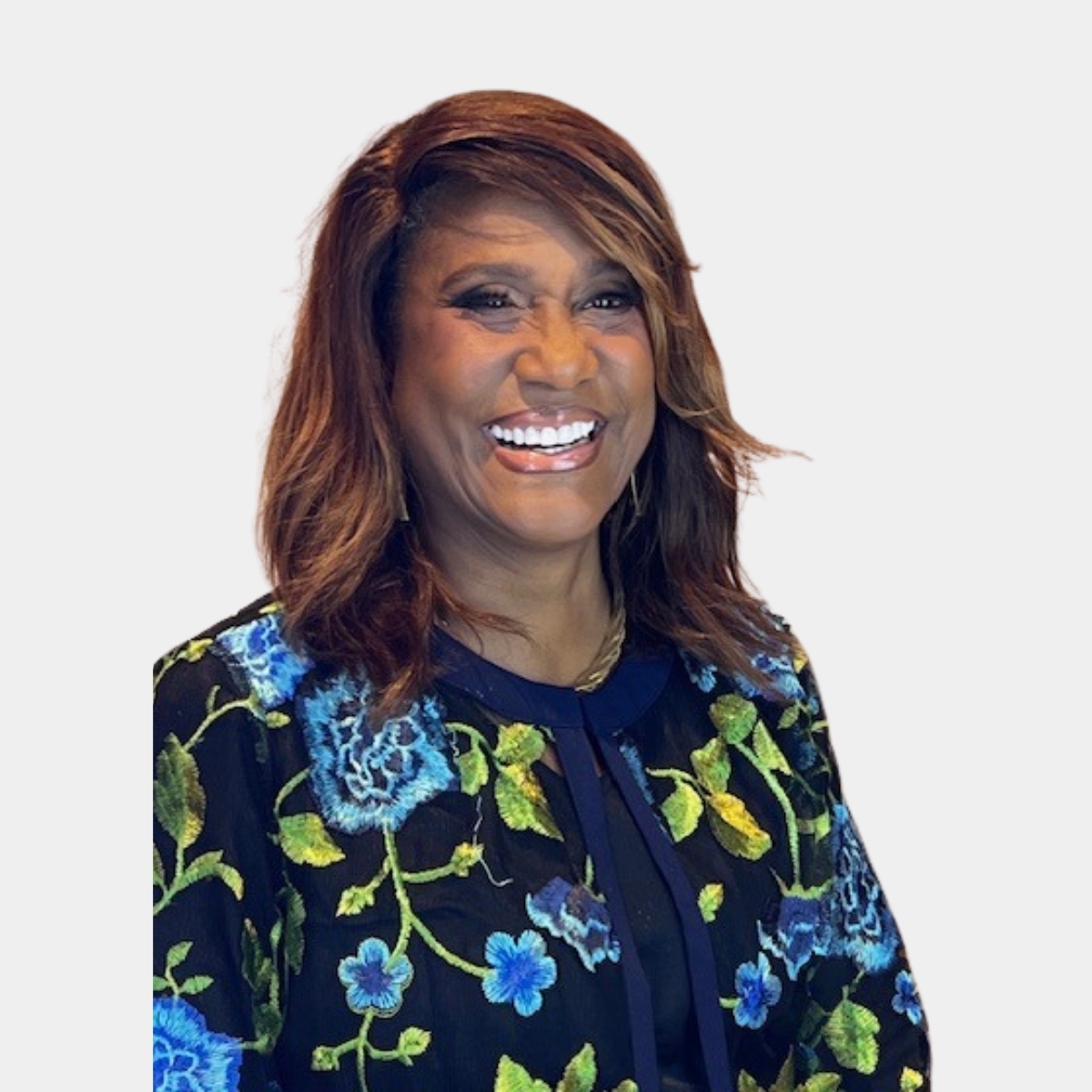
Article by
Franne McNeal
Franne McNeal, President, Significant Business Results LLC has helped 885+ small business owners collectively create 15,000 jobs and nearly $11 billion in revenue. We help architecture, engineering, and construction industry business owners with $1M-$20M in annual revenue, transform founder-dependent businesses into scalable, high-value enterprises. We solve the problems of low margins, inconsistent revenue and pressure to lower prices, by helping clients create a business that is an asset (one that runs without them), based on a proven system 8-pillar framework to increase the value of a business by 71%. We empower owners to move from being indispensable operators to intentional builders of enduring businesses, so they create financial & personal freedom. Our clients focus their energy for action to achieve significant business results.