.png)
Why does taking a two-week vacation prove whether you have a business or just an expensive job?

Table of Contents
• The Two-Week Vacation Test: A Strategic Diagnostic for AEC Owners
• Signs Your AEC Firm is an Expensive Job (And How It Affects Value)
• Building a Firm That Runs Without You: 2026 Strategies
The Two-Week Vacation Test: A Strategic Diagnostic for AEC Owners
For many successful owners in the architecture, engineering, and construction (AEC) industries, the idea of a true vacation feels like a fantasy. You’ve built a firm with million-dollar revenues, but you’re still the one answering late-night client calls and signing off on every critical decision. If you were to disappear for two weeks—completely unreachable—what would happen? Would your business thrive, survive, or grind to a halt?
This question is the foundation of the Two-Week Vacation Test. It’s not about self-care or preventing burnout; it’s a powerful diagnostic tool that reveals the fundamental truth about your company. It proves whether you’ve built a scalable, independent business or simply created a high-stress, expensive job for yourself.
Define the Vacation Test
This isn’t a long weekend or a “working” vacation where you check emails from the hotel. The test requires a total disconnect for 14 consecutive days. No calls, no emails, no "just checking in." Your team is on its own.
Why 14 days?
The first week is often deceptive. A company can run on sheer momentum, and your team can handle minor issues by deferring larger ones until you return. The second week is where the truth emerges. Without your input, systemic weaknesses, operational bottlenecks, and leadership gaps begin to crack under pressure.
An "Expensive Job" vs. a "Business"
If your absence causes chaos, you have an expensive job. You are the central operating system, and the company’s success is tied directly to your personal effort. A true business, however, is an asset. It functions and grows because its systems, processes, and people—not just the owner—do the work.
The Goal
The objective is to transition from being the indispensable operator who fights daily fires to becoming the intentional builder who designs a self-sustaining enterprise.
The AEC Reality: Why the "Hub and Spoke" Model Fails
In the AEC world, most founder-led firms operate on a "hub and spoke" model. The owner is the hub, and every critical function—client relationships, project oversight, financial decisions, and business development—is a spoke that connects directly back to them. While this model works for launching a firm, it creates a permanent bottleneck that prevents scaling and destroys long-term value.
This owner dependency is especially risky in high-stakes construction and engineering projects where a single delayed decision can lead to budget overruns and timeline failures. A business that cannot function without its founder is not a sellable asset. It’s a practice that has no value beyond the owner’s personal reputation and ability to generate revenue. To have transferable value, your firm must prove it can deliver consistent results, regardless of who is in the corner office.
Signs Your AEC Firm is an Expensive Job (And How It Affects Value)
Does your day-to-day reality reflect a business or a job? The symptoms of owner dependency are often mistaken for signs of importance. If you recognize these red flags, your firm’s growth and valuation are at significant risk.
• Key clients have your personal cell number and use it as the primary point of contact.
• Projects stall or critical decisions are postponed until you can provide a signature or final approval.
• Team members frequently say, "I'm waiting for instructions" or "I need to check with you first."
• You are the primary, and often only, rainmaker bringing in new business.
This level of dependency is the number one reason why otherwise profitable AEC firms receive low valuations or fail to sell altogether. A potential buyer isn’t acquiring your team and your client list; they are acquiring your systems for generating predictable results. If those "systems" all lead back to you, the business has no value once you exit. The solution lies in building a company based on a proven operational framework. The 8 Drivers of Company Value provide a clear roadmap to systematically reduce owner dependency and increase your company’s value by up to 71%.
The Cost of Being Indispensable
Every hour you spend acting as the "lead architect" or "head engineer" on a project is an hour you are not serving as the CEO. Your firm needs a strategic leader, not just another highly-skilled technician. This is especially true in the challenging market conditions projected for 2026. With persistent labor shortages, high interest rates, and rising material costs, AEC firms need a leader focused on navigating economic headwinds and optimizing for efficiency—not one buried in blueprints or on-site problem-solving.
Your reputation as the go-to expert may feel like an asset, but it can quickly become your biggest business liability. Being indispensable directly harms your exit strategy. A sophisticated buyer will perform due diligence and see that the firm's revenue, client relationships, and operational stability are tied to you. They will not pay a premium for a business that effectively leaves when you do. Building a valuable company means making yourself progressively less essential to its daily operations.
Building a Firm That Runs Without You: 2026 Strategies
Transitioning your firm from a job to an asset is a deliberate process, not an overnight change. It requires a systematic approach to delegating responsibility and empowering your team. By focusing on the right steps, you can build a resilient organization that thrives in your absence and is prepared for the market pressures of 2026 and beyond.
Audit Your Daily Tasks
For one week, document every task you perform. Categorize them into four groups: tasks only you can do, tasks you can delegate, tasks you can automate, and tasks you should eliminate. This audit will reveal the "owner-only" bottlenecks in your project delivery, client management, and financial oversight.
Implement Standard Operating Procedures (SOPs)
Document the critical processes that drive your firm, from client intake and project bidding to quality control and invoicing. Clear, written SOPs transform your unique expertise into a repeatable company asset, allowing your team to deliver consistent results without your constant intervention.
Empower a Leadership Team
Identify key individuals who can take ownership of critical functions. Invest in their development through executive coaching and establish clear accountability frameworks. Give them the authority to make decisions and the responsibility for the outcomes. A business that runs without you needs a team that is trained and trusted to lead.
Gradually Increase Your "Time Away"
Start small. Take a 48-hour period where you are completely offline. Debrief with your team to identify what went well and where the systems broke down. Address the issues, then extend your time away to a long weekend, then a full week, and finally, the full two-week test.
Transitioning to an Intentional Builder
The journey from operator to owner requires a fundamental mindset shift. It means learning the difference between working *in* your business versus working *on* it. Your role must evolve from doing the work to designing the system that does the work. Programs like the Significant Business Results Mastermind are designed to help AEC leaders make this transition, providing the strategic planning tools needed to align your team and achieve results without constant oversight.
The first step is understanding where you stand today. How dependent is your business on you right now? What is its current value as a sellable asset? Answering these questions honestly is the starting point for building a company that gives you true financial and personal freedom.
Determine if your AEC firm is a sellable asset by taking the Value Builder Score assessment today.
Frequently Asked Questions (FAQs)
What is the "Vacation Test" for business owners?
The "Vacation Test" is a 14-day period where a business owner completely disconnects from their company—no calls, emails, or check-ins. It serves as a real-world diagnostic to determine if the business has the systems, processes, and leadership to operate successfully without the founder's direct involvement. Passing the test indicates you have built a true business asset, while failing it reveals an over-reliance on the owner, characteristic of an "expensive job."
How do I reduce owner dependency in an architecture or engineering firm?
Reducing owner dependency in an AEC firm involves four key steps: 1) Auditing your daily activities to identify bottlenecks. 2) Documenting and implementing Standard Operating Procedures (SOPs) for project delivery and client management. 3) Developing and empowering a leadership team to take ownership of key decisions. 4) Gradually testing the systems by increasing your time away from the business.
Why is my business worth less if I am the primary rainmaker?
If you are the primary or sole source of new business, your company’s revenue is tied to your personal relationships and efforts. A potential buyer sees this as a major risk, because when you leave, the revenue stream is likely to leave with you. A business with a diversified and systemized approach to sales and marketing—one that doesn't rely on a single person—is far more stable, predictable, and therefore more valuable to an acquirer.
Can a construction company really function without the founder on-site?
Absolutely. While a founder's expertise is critical in the early stages, a scalable construction company must be able to function without their constant on-site presence. This is achieved through robust systems for project management, quality control, and safety, along with a well-trained team of project managers and site supervisors who are empowered to make decisions and manage day-to-day operations effectively.
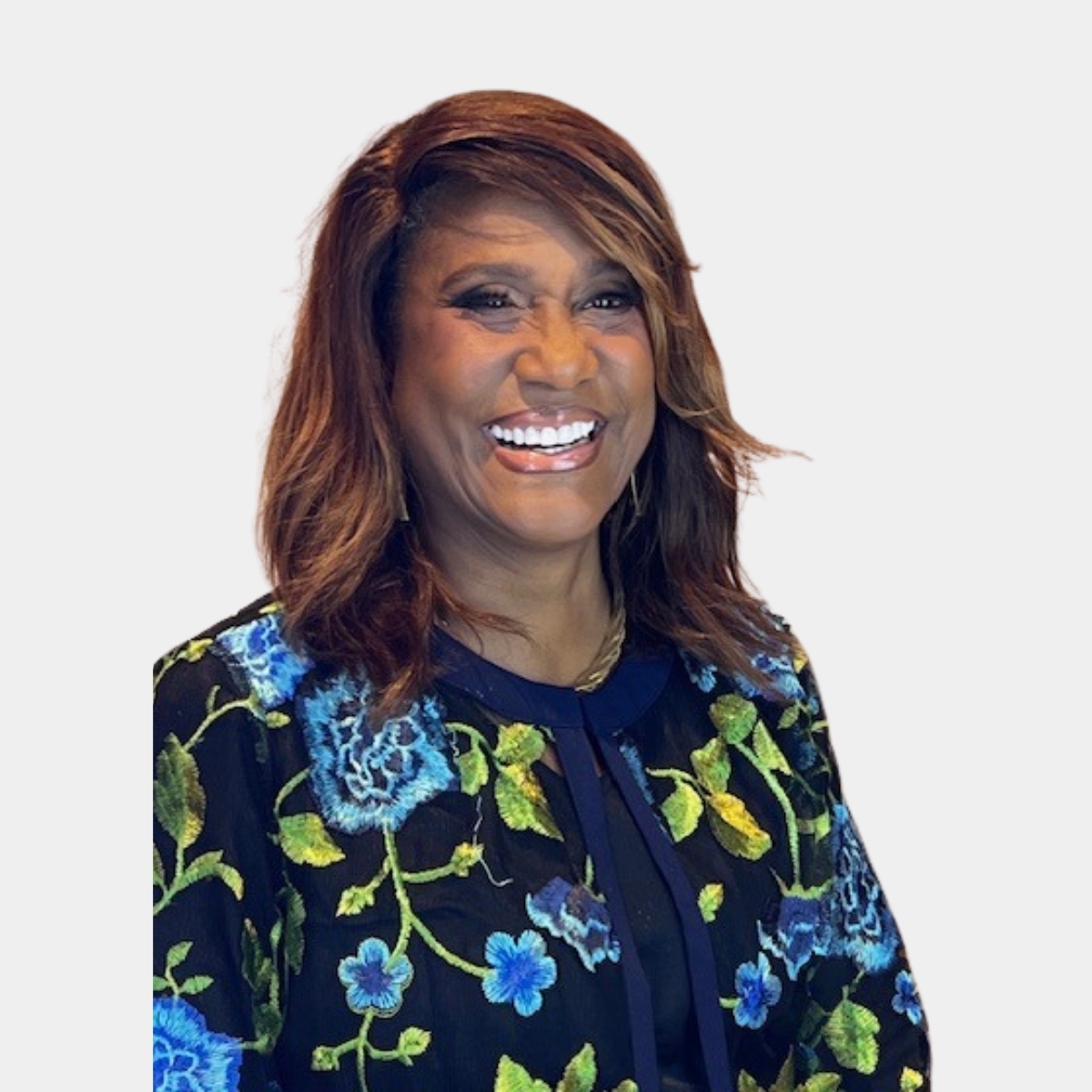
Article by
Franne McNeal
Franne McNeal, President, Significant Business Results LLC has helped 885+ small business owners collectively create 15,000 jobs and nearly $11 billion in revenue. We help architecture, engineering, and construction industry business owners with $1M-$20M in annual revenue, transform founder-dependent businesses into scalable, high-value enterprises. We solve the problems of low margins, inconsistent revenue and pressure to lower prices, by helping clients create a business that is an asset (one that runs without them), based on a proven system 8-pillar framework to increase the value of a business by 71%. We empower owners to move from being indispensable operators to intentional builders of enduring businesses, so they create financial & personal freedom. Our clients focus their energy for action to achieve significant business results.